
 By
By 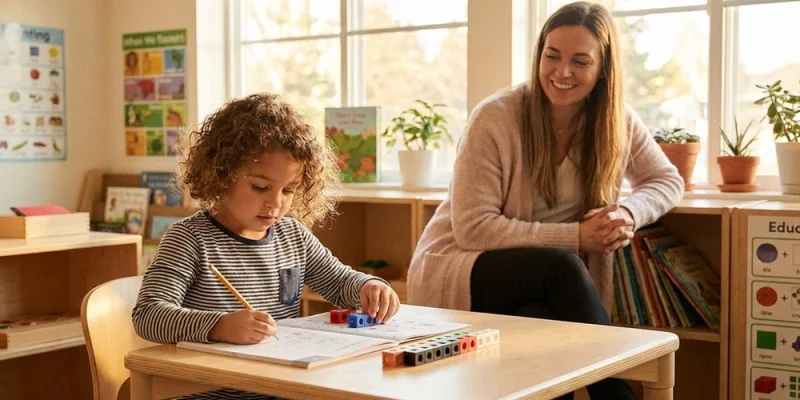
Meta: Wondering how Montessori prepares children for kindergarten? See how academic, social, and executive function skills build a smooth transition.
How Montessori Prepares Children for Kindergarten and Beyond
Many parents wonder how Montessori prepares children for kindergarten when the classroom looks so different from a traditional one. Research suggests that Montessori children generally adjust well to kindergarten, often arriving with strong academic foundations, solid executive function skills, and real independence. This post breaks down what “ready” actually means and how KV Montessori Academy builds those skills every day.
Kindergarten readiness is not just about knowing letters and numbers. Early childhood experts generally describe it as a combination of academic skills, social-emotional maturity, and physical development working together, not any single measure on its own. Organizations like NAEYC frame readiness this way, and pediatric guidance from the American Academy of Pediatrics echoes a similar whole-child view.
A child who can count to twenty but melts down over sharing crayons is not fully ready in the same way a child who can wait their turn but cannot hold a pencil isn’t either. Kindergarten asks children to sit, listen, follow multi-step directions, manage big feelings, and engage with new material, often all in the same hour. That is a lot to ask of a five-year-old, which is exactly why the years before matter so much.
Montessori’s whole-child approach was designed with this same idea in mind long before “readiness” became a research term. A Montessori classroom intentionally blends academic work, independence, and social interaction into the same three-hour block, rather than treating them as separate subjects.
Academic Readiness: Reading, Writing, and Math Foundations
Montessori classrooms build early literacy and math skills through hands-on materials long before children pick up a workbook. Children trace sandpaper letters to feel letter shapes, build words with movable alphabets, and use concrete materials like bead bars to understand quantity before ever seeing an abstract number on a page. This sensory-first approach is meant to make abstract concepts click naturally.
According to Fast Facts on Montessori research compiled by the American Montessori Society, several studies point to stronger academic outcomes for children in Montessori preschool and elementary programs compared to children in more conventional settings. One national randomized study published in PNAS found that children assigned to Montessori programs showed gains in academic measures relative to a comparison group, though researchers are careful to note that outcomes vary by school, fidelity to the method, and individual child.
It is worth saying plainly: no single study guarantees any one child will read early or excel at math. What the research does suggest, cautiously, is that the daily practice of working hands-on with concrete materials tends to build a durable, well-understood foundation rather than memorized facts that fade.
Social and Behavioral Readiness: Adjusting to a New Classroom Culture
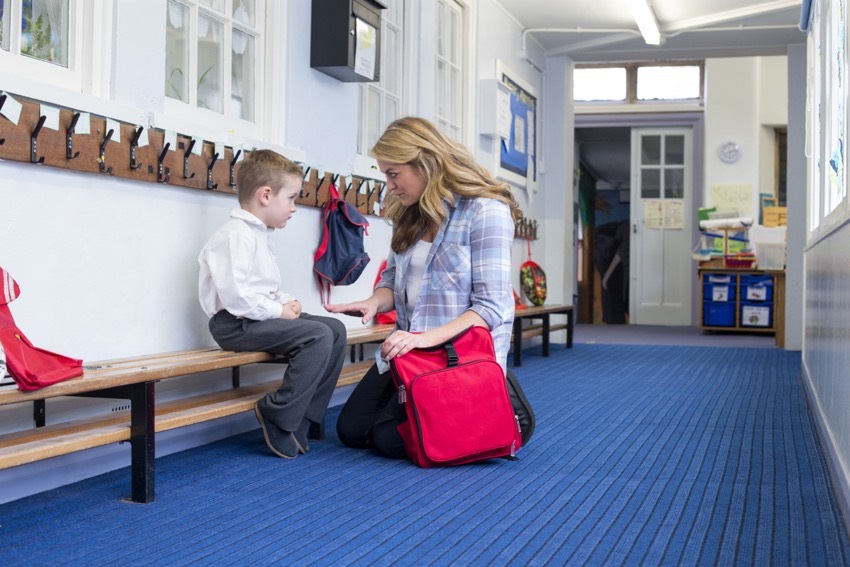
Traditional kindergarten looks and feels different from a Montessori classroom, and it helps to be honest about that upfront. A Montessori child is used to choosing their own work, moving freely around the room, and working alone or with a small group for long, uninterrupted stretches. Kindergarten typically asks a class to move together, follow a single group pace, and raise a hand before speaking.
That said, Montessori’s mixed-age classroom is quietly built to prepare children for exactly this kind of shift. Younger children watch and learn from older classmates, and older children practice patience, leadership, and cooperation by mentoring the younger ones. Research and pedagogical writing from the Association Montessori Internationale suggests this everyday social mixing supports the development of self-regulation, the ability to manage impulses and emotions in a group setting.
A strong kindergarten transition starts years earlier, in the everyday habits of focus, choice, and self-control.
Children accustomed to Montessori’s respectful, cooperative culture often bring that same courtesy into a new classroom, even one with different routines. The adjustment period is real, but it tends to be about learning new logistics, not relearning how to get along with others.
Executive Function: The Skill Set That Predicts Long-Term Success
Executive function refers to a set of mental skills including working memory, impulse control, and flexible thinking that let a child plan, focus, and follow through on a task. Experts at Zero to Three describe these skills as some of the strongest predictors of later school success, often mattering more than early academic knowledge alone. Montessori classrooms build them daily through practical life work.
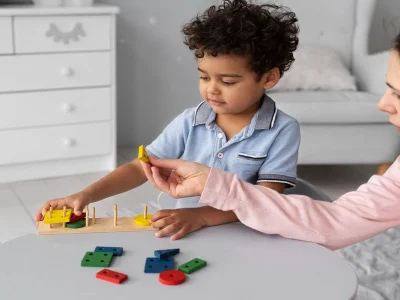
Practical life activities such as pouring water, buttoning a frame, or preparing a snack seem simple, but they ask a young child to plan steps, concentrate, and correct their own mistakes without an adult stepping in. The American Montessori Society points to executive function as one of the socio-emotional areas where Montessori-attending children have shown stronger results in comparative studies. Repeated daily practice with real tools and real consequences, rather than worksheets, helps explain why.
A child who has spent years choosing their own work, sticking with it through frustration, and returning materials to a shelf has been quietly practicing the exact skills a kindergarten teacher relies on: focus, follow-through, and self-management.
What Happens After Montessori? A Look at Long-Term Outcomes
Long-term outcomes research on Montessori education should be read with care, since findings vary by study design and school quality, but a pattern of encouraging associations shows up repeatedly. Comparative studies referenced in the American Montessori Society’s Fast Facts on Montessori research have found associations between Montessori attendance and positive outcomes extending into middle school and high school, including stronger academic performance and more positive feelings about school itself.
One study comparing high schoolers who had attended Montessori programs earlier in childhood to a matched comparison group found associations with certain positive academic and social outcomes years later. Researchers describe these as associations, not guarantees, since so many other factors, from family environment to individual temperament, shape a child’s path.
Reading these findings, the sensible takeaway for parents is not “Montessori guarantees success.” It is that the daily habits Montessori builds, focus, independence, and comfort with self-directed work are the same habits that tend to serve children well long after they leave a Montessori classroom.
How KVMA’s Primary Advanced Classroom Prepares Local Children
At KV Montessori Academy, the Primary Advanced classroom serves children ages 3.5 to 6 and is specifically structured around the skills kindergarten will ask for. Children work through an uninterrupted three-hour work cycle each morning, choosing activities, staying with them, and cleaning up independently, a rhythm that closely mirrors the focus and self-direction kindergarten classrooms expect.
Because KVMA is a bilingual program, children in this classroom also build daily fluency in Spanish alongside English, layering language development directly into their academic and social routines. For many Eastlake and Chula Vista families, this dual benefit, kindergarten readiness plus real bilingual growth, is a major reason they choose Montessori in the first place.
Older children in the Primary Advanced classmates naturally take on leadership roles, demonstrating work to younger classmates and modeling classroom expectations. That mentoring role builds confidence and communication skills that transfer directly into a traditional classroom setting, where a child is expected to interact respectfully with peers of all skill levels. You can see this rhythm firsthand by reading more on our curriculum page or browsing recent classroom stories on our blog.
Simple Ways Parents Can Support the Transition at Home
Parents play a real role in easing the shift from Montessori to a traditional kindergarten classroom, and small, consistent habits at home go a long way. Keeping a predictable daily routine, similar wake times, and similar after-school rhythms helps a child’s nervous system settle into new expectations faster.
Offering small choices at home, like picking between two outfits or two breakfast options, reinforces the sense of independence a Montessori child already has, while still fitting into a busier family schedule. This keeps the “I get to choose” feeling alive even outside the classroom.
Talking about “big kid school” in a warm, matter-of-fact way also matters more than parents often realize. Children pick up on parental anxiety quickly, so a calm, positive tone about the upcoming change tends to set the emotional stage for a smoother transition.
Key Takeaways
- Montessori children generally adjust well to traditional kindergarten and often arrive with strong academic foundations.
- Executive function skills like focus and self-control are built daily through practical life work and are associated with long-term school success.
- Social readiness, getting along with others and managing emotions, matters just as much as academic readiness.
- Some adjustment, like raising a hand or moving at a single group pace, is normal, and most children settle in within the first few weeks.
- Every child develops at their own pace, and that is completely normal.
Conclusion
Preparing a child for kindergarten is not about cramming in more worksheets during the final year. It is about the small, steady habits built over years: choosing work, sticking with it, and learning to navigate a classroom community with confidence. That is exactly the environment a Montessori morning is designed to create.
Curious what a Montessori day actually looks like for your child? Come see it in person. KV Montessori Academy welcomes families in Eastlake and Chula Vista to tour our classrooms and meet our teachers. Schedule a Tour or call (619) 730-4020.
Please note that every child develops at their own pace. This article is general educational information based on published research and is not a guarantee of specific developmental or academic outcomes for any individual child.
Frequently Asked Questions
Do Montessori kids struggle when they switch to a traditional school?
Most Montessori children adjust well, though there is usually a short adjustment period as they get used to new routines like raising a hand or following a single class schedule. Teachers and researchers generally describe this adjustment as manageable rather than disruptive, especially since Montessori children already bring strong independence and self-regulation skills. Most children settle into the new rhythm within the first few weeks.
What is executive function, and why does it matter for kindergarten readiness?
Executive function is the group of mental skills that let a child plan, focus, manage impulses, and hold information in mind while completing a task. These skills are considered strong predictors of school success because they affect how well a child can follow directions, stay on task, and work through frustration. Montessori builds executive function daily through practical life activities like pouring, buttoning, and food preparation.
Will my child be behind academically if they attended Montessori instead of a traditional preschool?
Research generally does not support that concern. Comparative studies referenced by the American Montessori Society suggest Montessori children often perform as well as or better than peers from conventional preschool programs on academic measures, though results can vary by school and individual child. Montessori’s hands-on approach to reading, writing, and math tends to build strong conceptual understanding rather than just memorized facts.
How does the mixed-age classroom help prepare my child socially?
In a Montessori classroom, younger and older children work side by side, which naturally builds patience, cooperation, and communication skills. Older children practice leadership by mentoring younger classmates, while younger children learn by observing older peers. This everyday social mixing is thought to support the kind of self-regulation and cooperation kindergarten classrooms expect.
What can I do at home in the months before kindergarten starts?
Keeping consistent daily routines, offering small everyday choices, and talking positively about “big kid school” all help ease the transition. Children tend to pick up on a parent’s tone, so calm, matter-of-fact conversations about the change can reduce anxiety. Visiting the new school ahead of time, if possible, can also help build familiarity and confidence.





Comments